The destruction of Hungarian Jewry is a particularly tragic story, since, as of the middle of 1944, the Jewish community of about 750,000 was intact. Thus, this destruction was carried out when the perpetrators knew the war was lost and was carried out in full view of the outside world. The philatelic materials below may be categorized as follows: (1) internment camps; (2) transit camps; (3) labor camps; and (4) the Hungarian Labor System.
Anti-Jewish legislation in Hungary began as early as 1938. As more and more restrictions were enacted on Jewish employment, a large pool of Jewish employed became available. With this pool in mind, the Hungarian government enacted a forced labor system for Jews. It is estimated that up to 130,000 men served in this system, with about 30,000 to 40,000 dying. These laborers were employed in a variety of military and government projects, and many of these individuals were attached to labor service companies and enterprises for use within and outside the country.
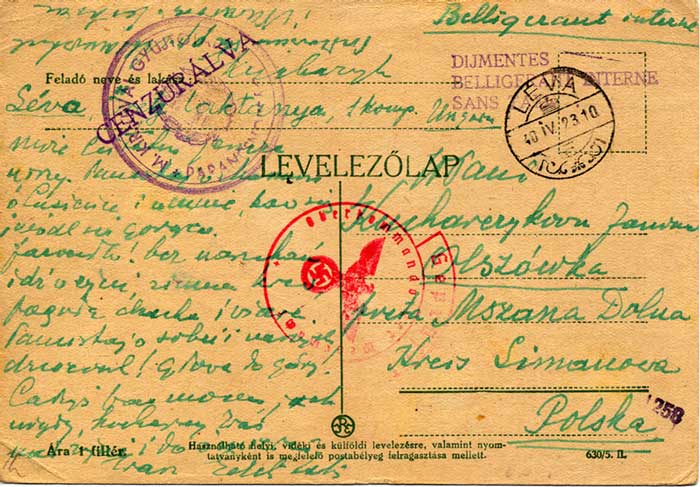
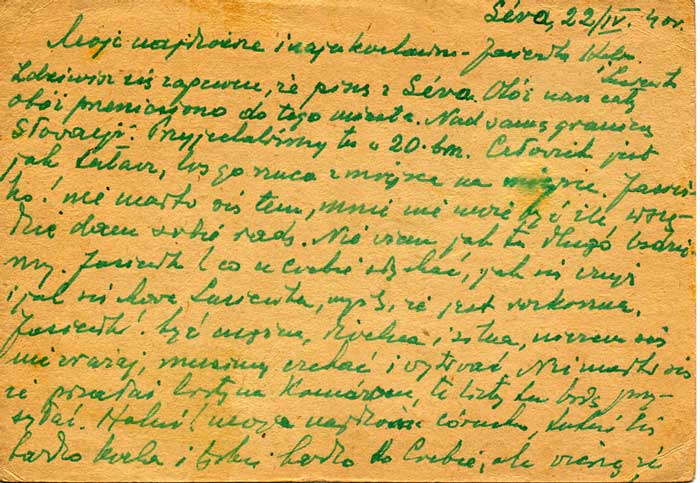
Below are thumbnails of postcards from various Hungarian internment camps. After the Nazis took control of Poland, about 150,000 Poles (including about 15,000 Jews) fled to Hungary. Many of these refugees were interned in camps. The first postcard is from the camp at Leva, which was a town in the portion of Czechoslovakia ceded to Hungary in November 1938. In addition to about 2,600 Jews, many Polish Army officers who had fled Poland were interned in Leva. The postcard is to Poland and is postmarked April 23, 1940. The next postcard is from the internment camp at Szombathely. This postcard is to Limanowa, Poland, and is postmarked February 3, 1942. Please click on the thumbnail to see the full image, and then click your back key or "Postcards 1 & 2" in the left frame to return.
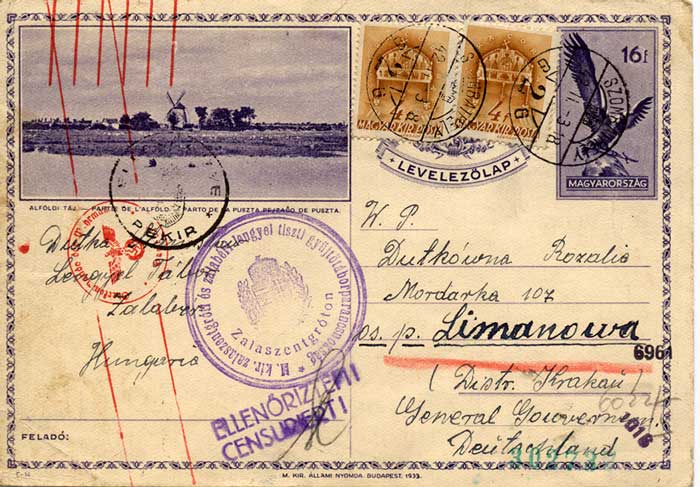
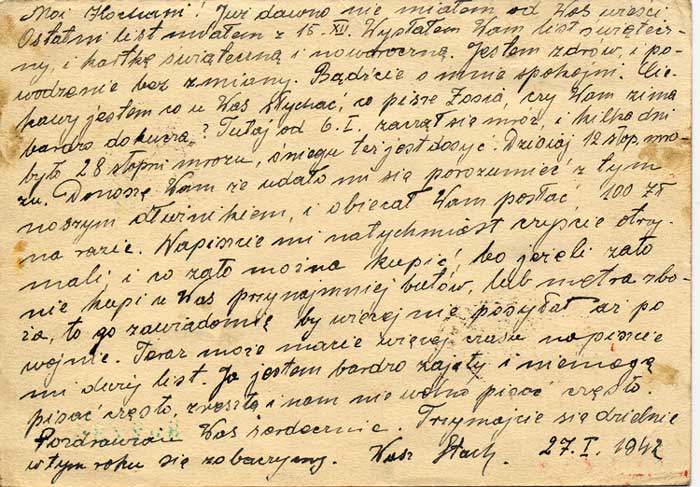
Below are thumbnails of a cover and letter from the internment camp at Zalaszentgrot. This postcard is to Limanowa, Poland, and is postmarked February 1, 1941. Please click on the thumbnail to see the full image, and then click your back key or "Letter" in the left frame to return.
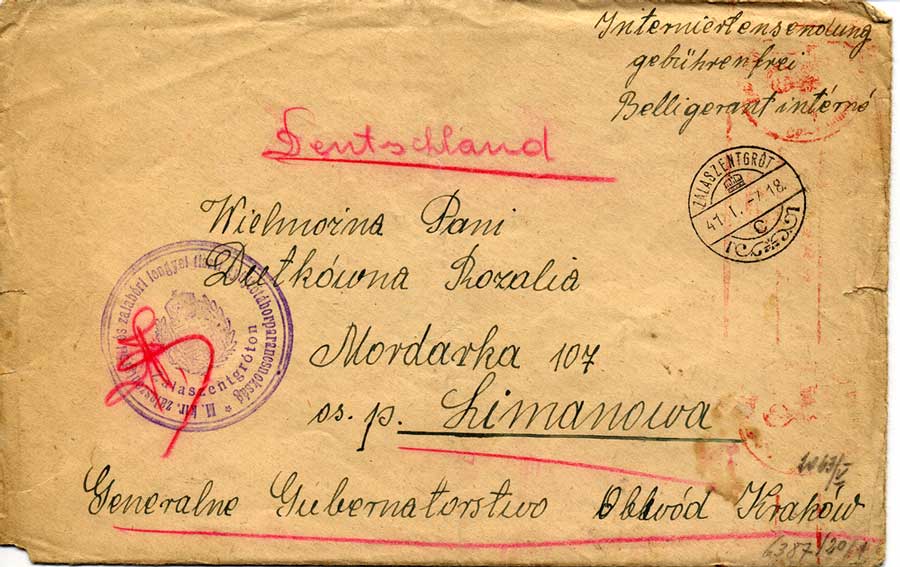
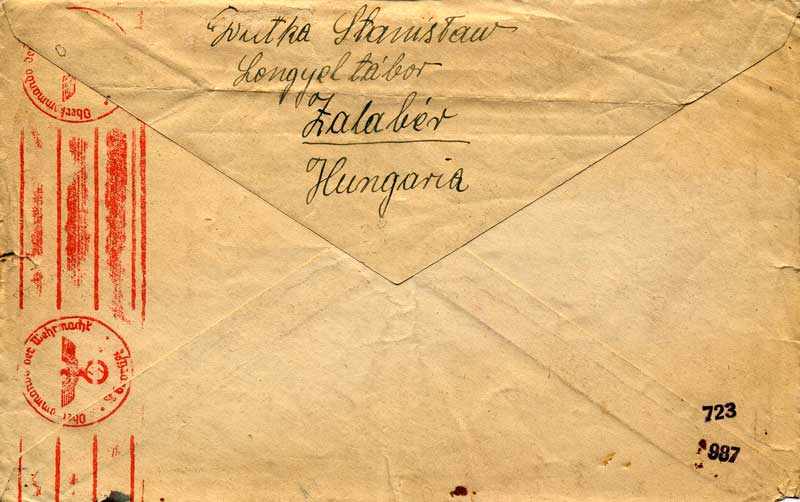
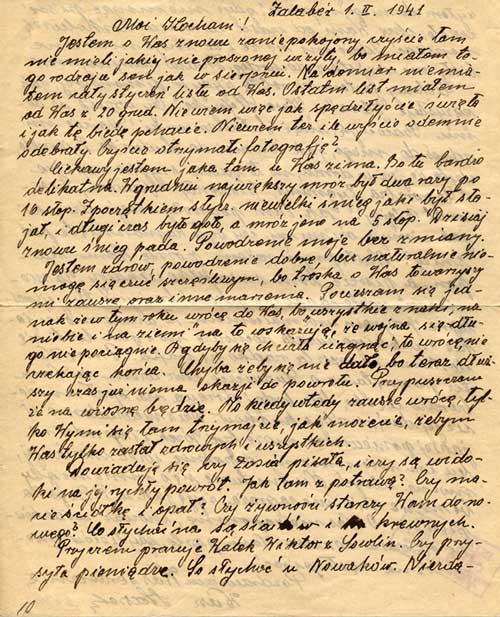
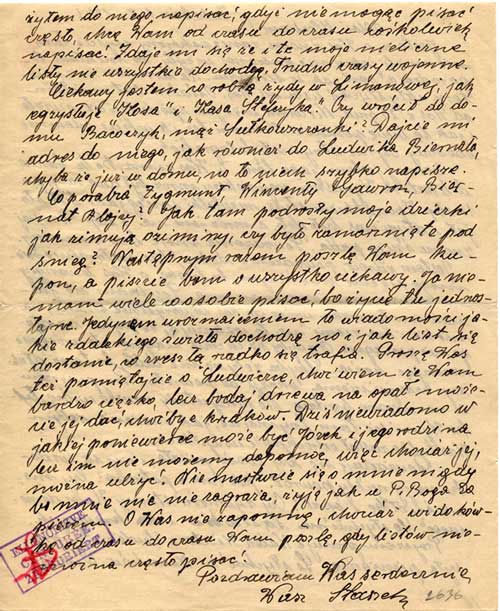
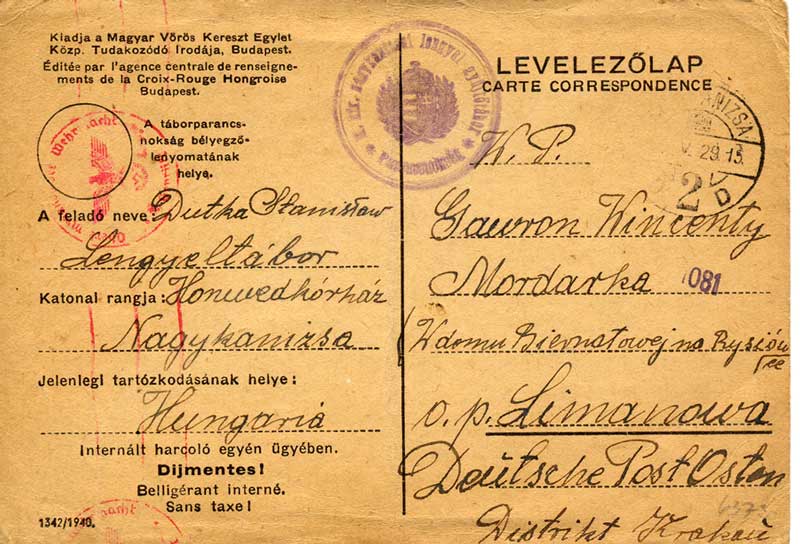
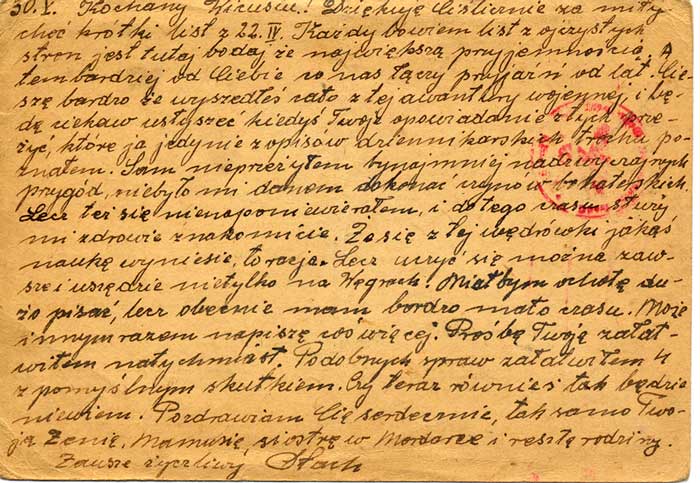
Below are thumbnails of a postcard from the internment camp at Nagykanizsa to Limanowa, Poland. Please click on the thumbnail to see the full image, and then click your back key or "Postcards 3" in the left frame to return.
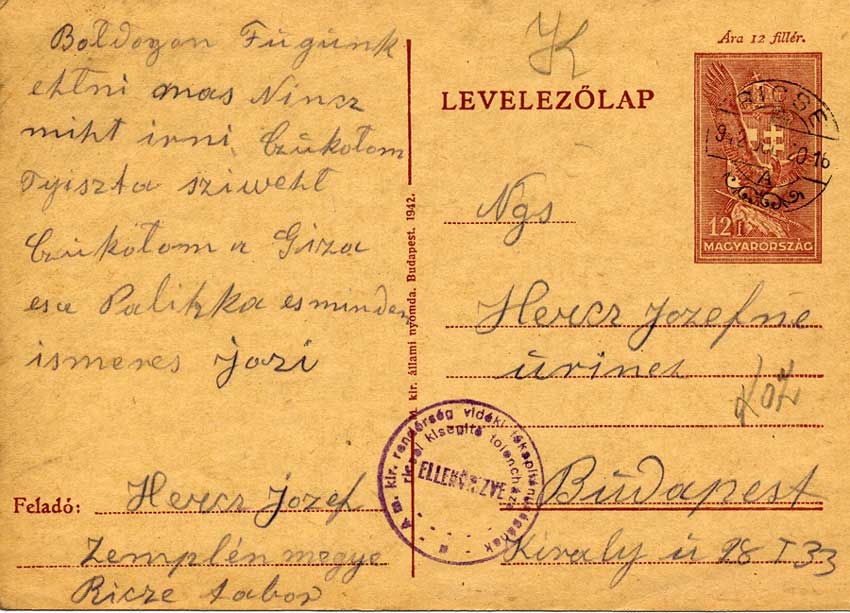
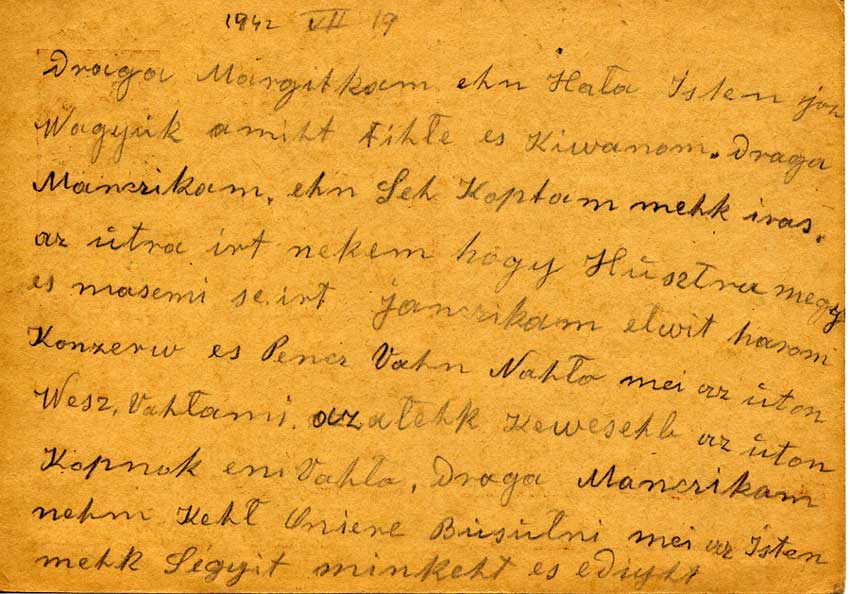
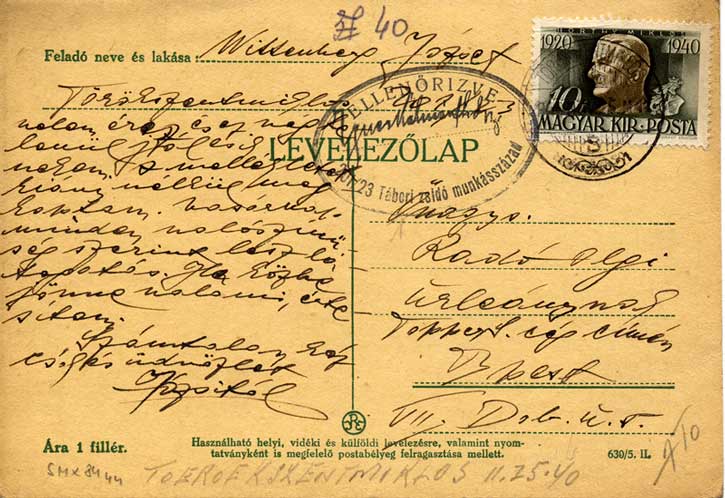
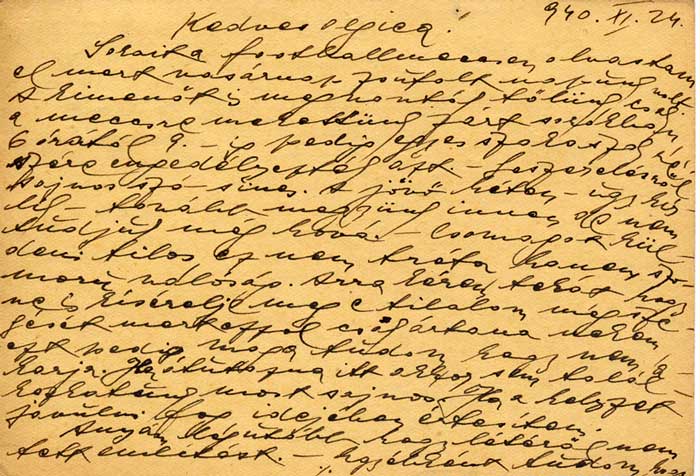
Below are thumbnails of postcards from various Hungarian transit camps. The first card is from the transit camp at Ricze Tabor, which was used primarily as a transit camp to Auschwitz. This postcard is to Budapest and is dated July 19, 1942. The second postcard is from the transit camp at Toeroekszentmiklos. This postcard is to Budapest and is dated November 24, 1940. Please click on the thumbnail to see the full image, and then click your back key or "Transit Camps" in the left frame to return.
Hungarian Forced Labor Battalions
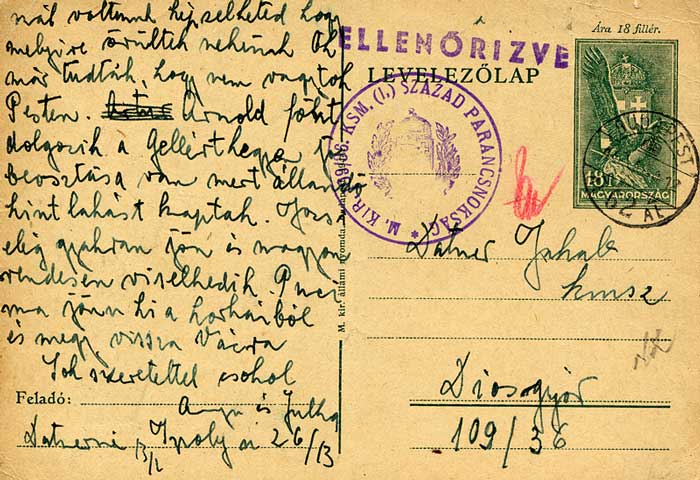
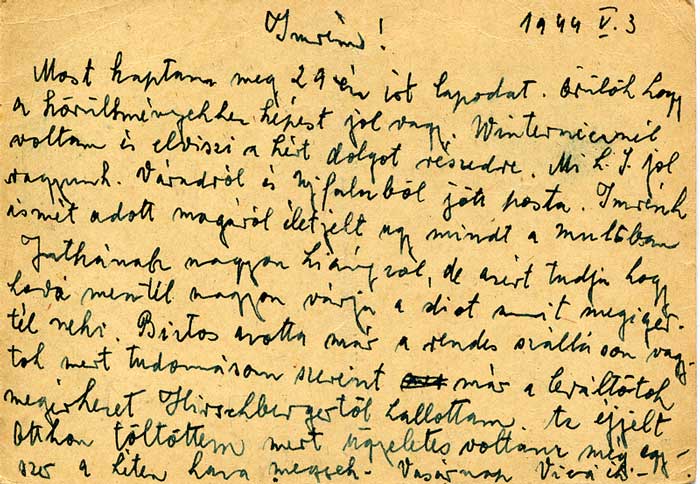
Below are thumbnails of postcards to and from conscripts serving in various Hungarian forced labor battalions. The first postcard is from Budapest and dated May 3, 1944, to a labor service company #109/36. The second postcard is from Budapest and postmarked April 10, 1943, to a labor service company. Please click on the thumbnail to see the full image, and then click your back key or "Postcards 1 & 2" in the left frame to return.
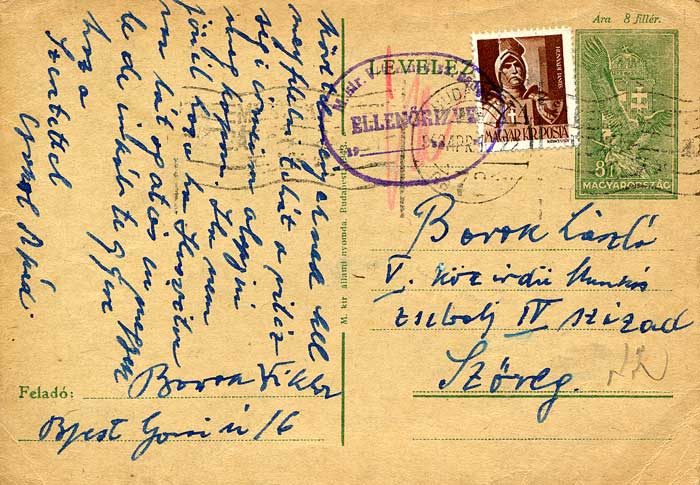
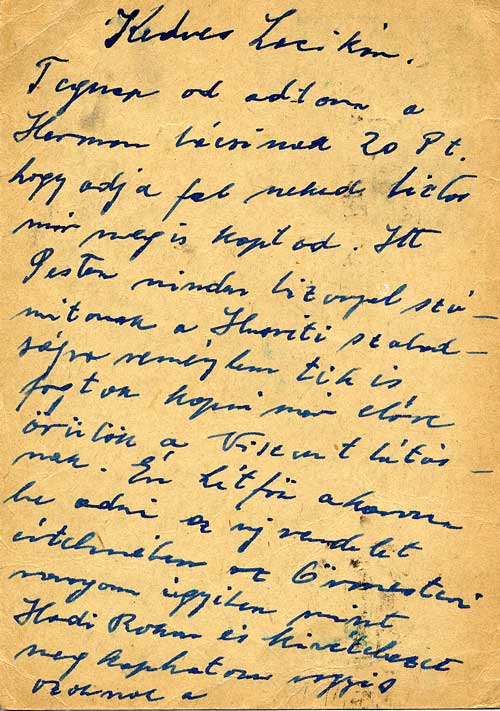
The third postcard is postmarked August 21, 1944, from a Jew attached to Labor Battalion #101/708 working in the Ukraine. The fourth postcard is postmarked May 21, 1943, from a Jew attached to Labor Battalion #253/62 working in the Kiev area. Please click on the thumbnail to see the full image, and then click your back key or "Postcards 3 & 4" in the left frame to return.
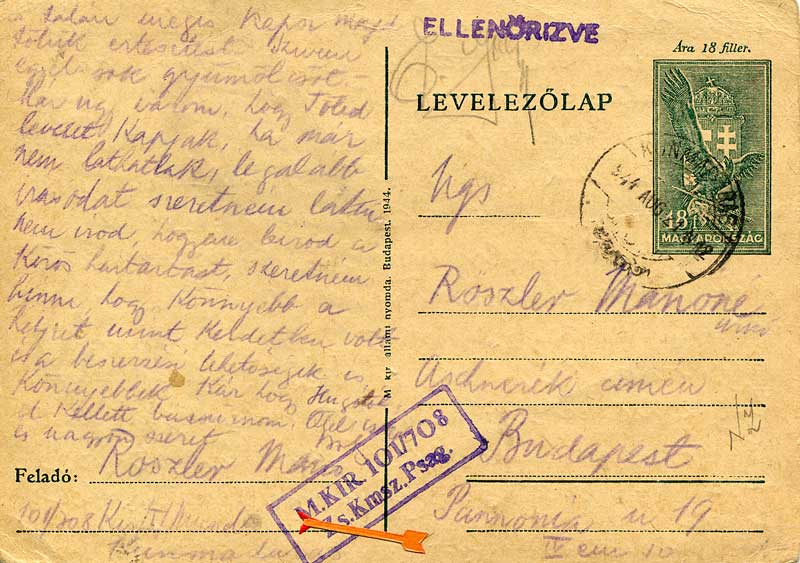
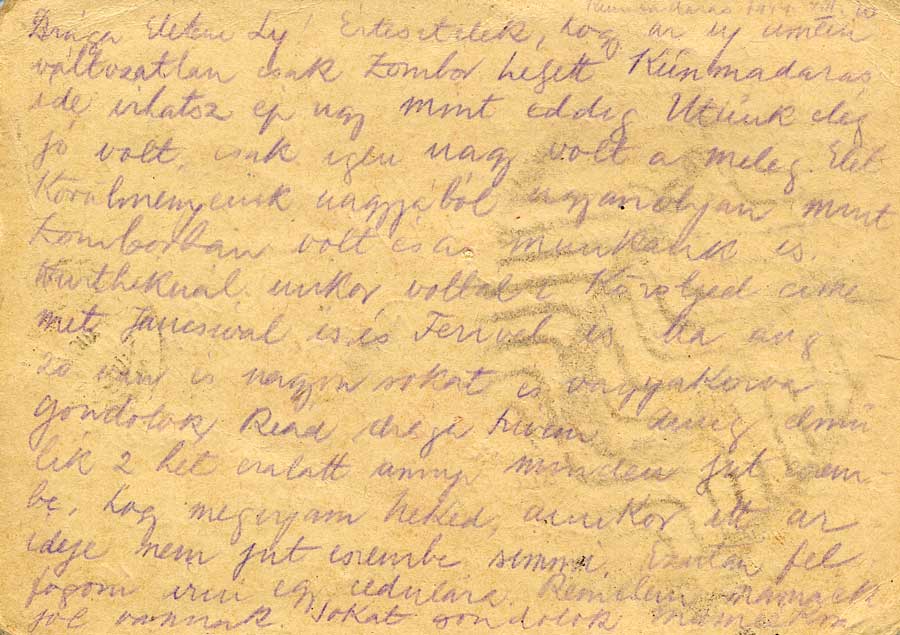
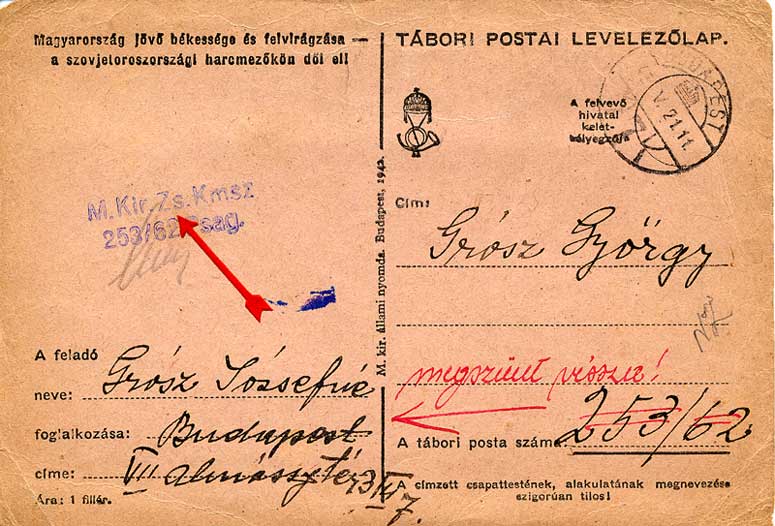
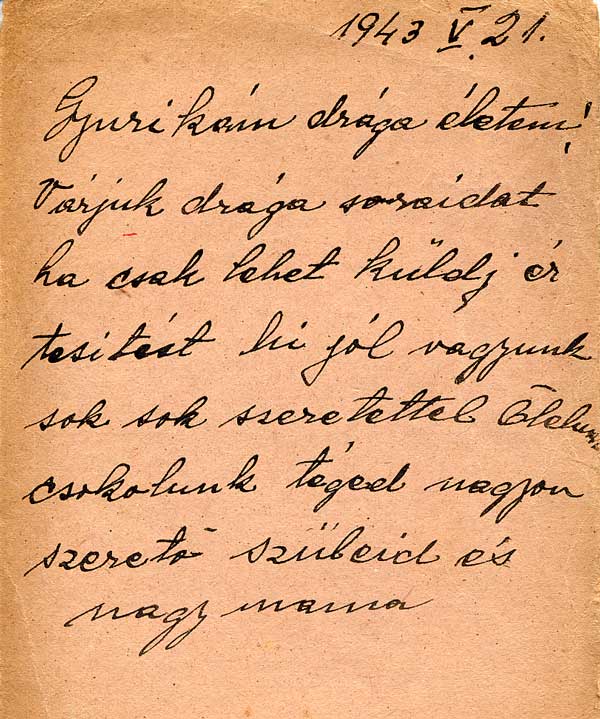
The fifth postcard is dated July 22, 1944, from a Jew attached to Labor Battalion #101/320 to Budapest. The sixth postcard is postmarked August 28, 1940 from a Jew attached to labor battalion 206/2. The postcard contains censor cachets. Please click on the thumbnail to see the full image, and then click your back key or "Postcards 5 & 6" in the left frame to return.
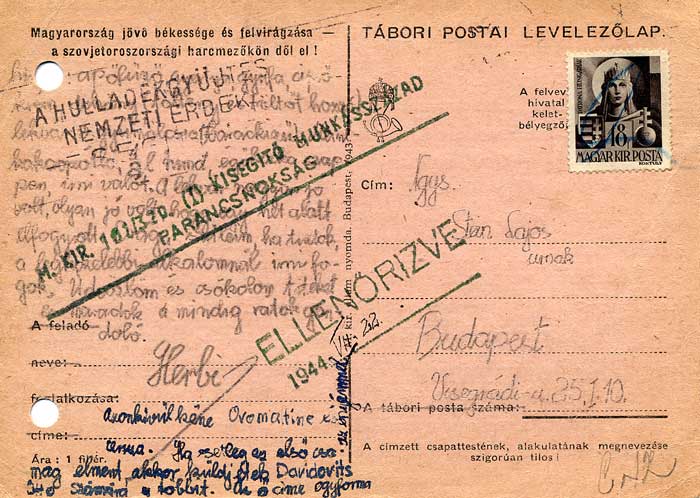
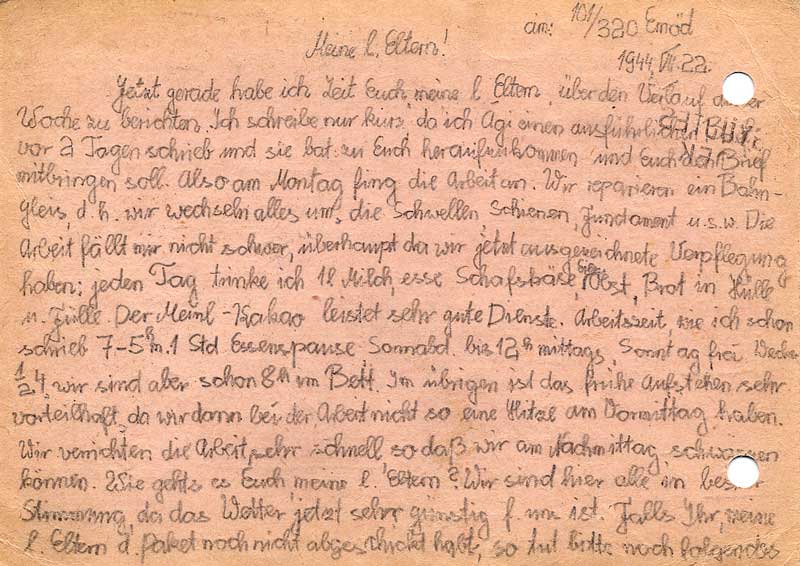
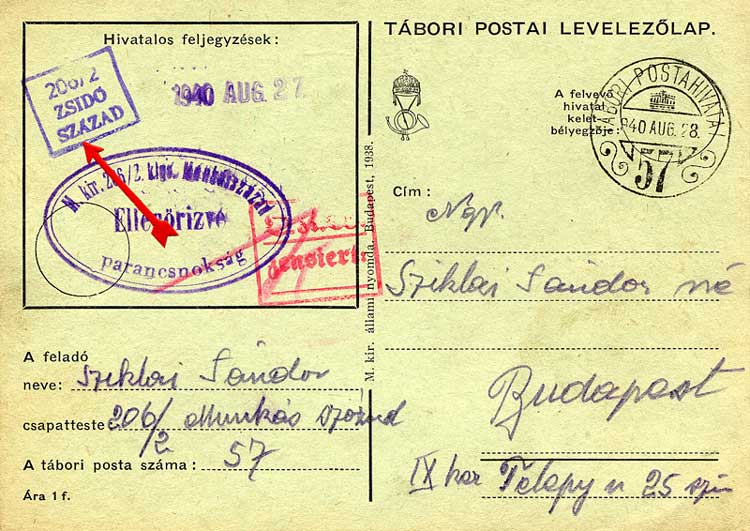
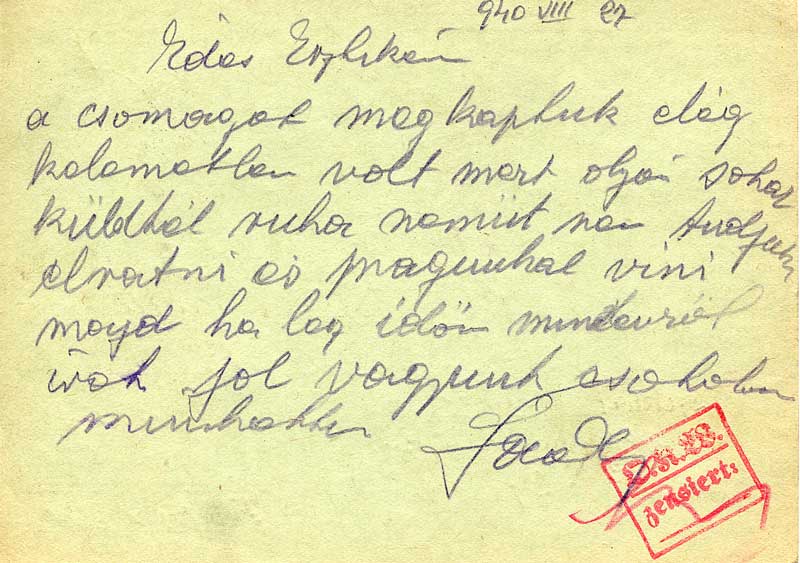
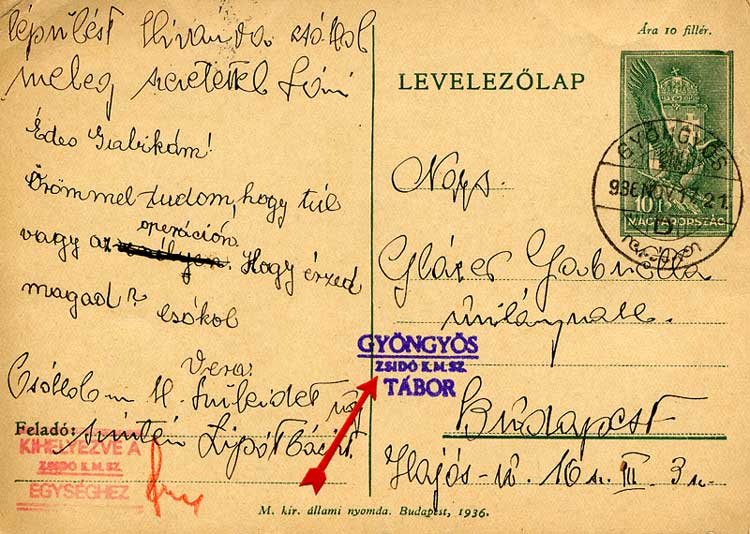
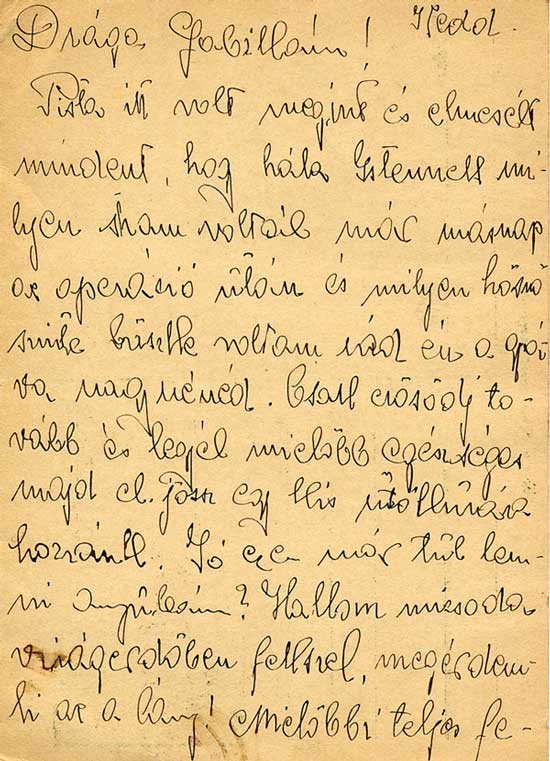
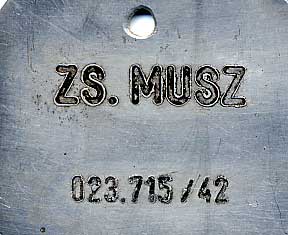
The seventh postcard is from a Jew attached to labor battalion located in Gyongyos, a town in northern Hungary. Gyongos was also the site of a ghetto consisting of about 1,600 local Jews. The final item is an identification tag of a Jew assigned to a labor battalion. The "ZS" indicates Jew (Zsido) and "MUSZ" indicates the location of the battalion. Please click on the thumbnail to see the full image, and then click your back key or "Postcard 7 & ID" in the left frame to return.
Hilberg, The Destruction of the European Jews, P. 796-860 (1985)
Copyright © 2003 Edward Victor