

Opole was a town in Poland in the Pulawy subdistrict, in the western part of the Lublin district. At the start of the war, the town had a Jewish population of 4,325. The Judenrat was established in October, 1939, and the ghetto was set up in March, 1941.. About 2,000 Jews from Vienna were brought into the Ghetto. By March, 1941, 8,000 Jews were living in the Ghetto. Beginning in March, 1942, deportations began, primarily to Sobibor. By the end of October, 1942, the last Jews had been either deported or killed.
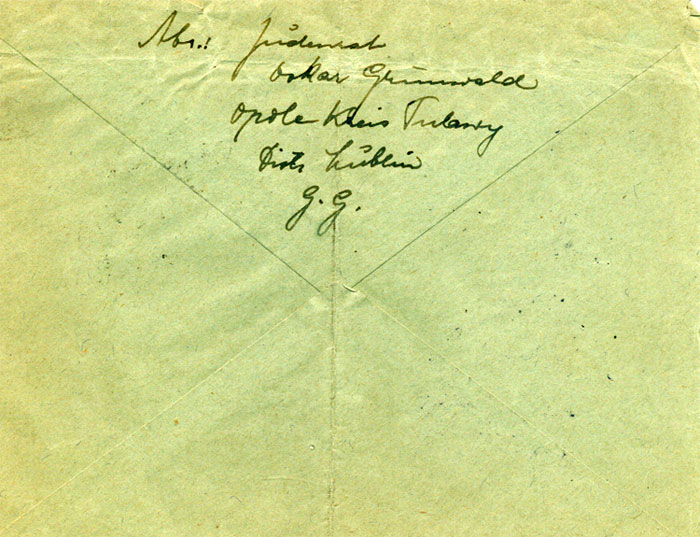
Below are thumbnails of two covers. The first is the front of a cover postmarked April 21, 1942, from Opole to Prague with a circular "Postvermittlungs Stelle Judenrat Opole" (post office switching place) cancel. The second is the front and back of a cover from Oskar Grunwald of the Judenrat in Opole to the "Die Judische Kultusgemeinde" (Jewish Community) in Prague, postmarked March 7, 1942. The cover bears the same Opole cancel as the first cover. Please click on the thumbnail to see the full image, and then click your back key or "Covers" in the left frame to return.
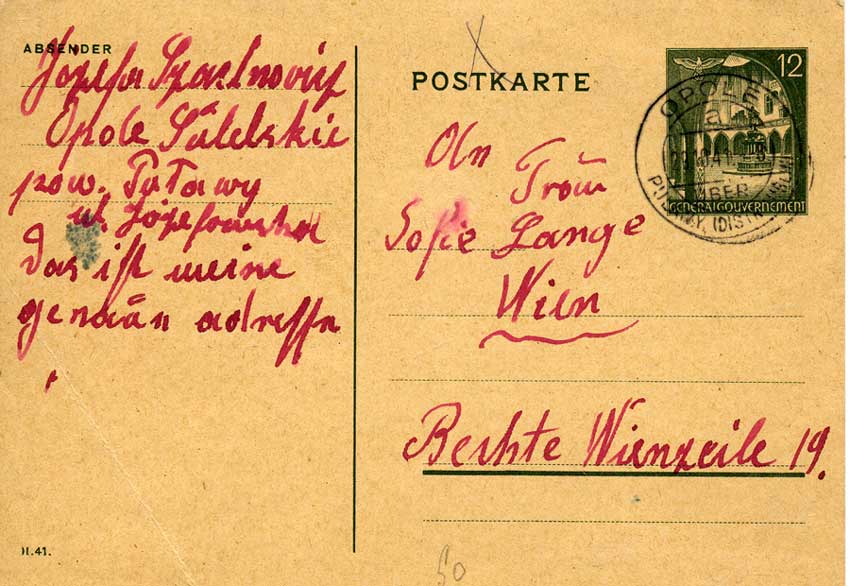
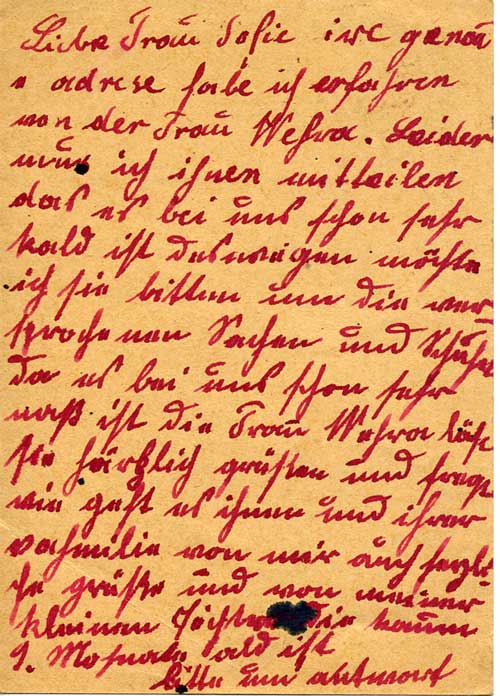
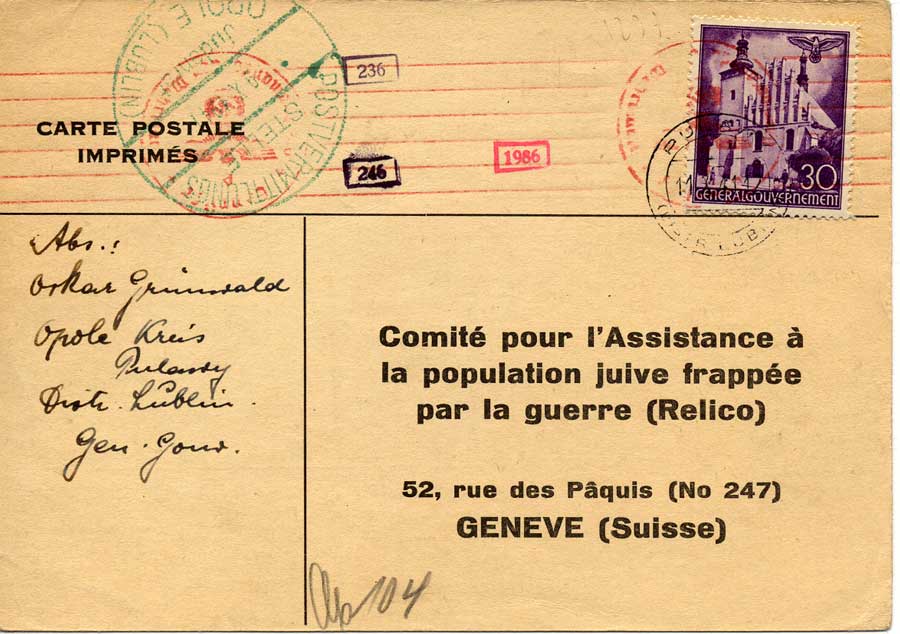
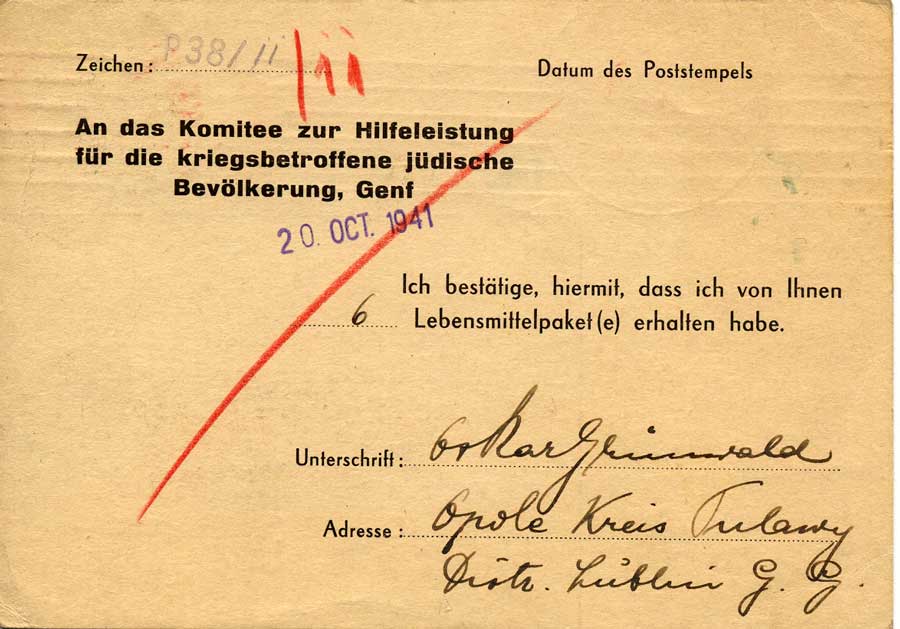
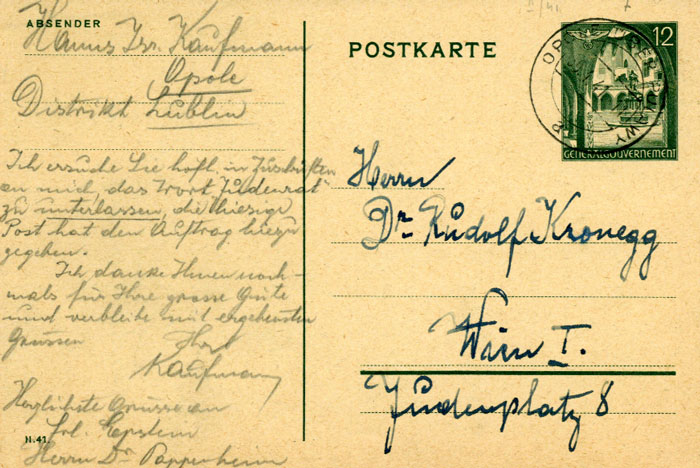
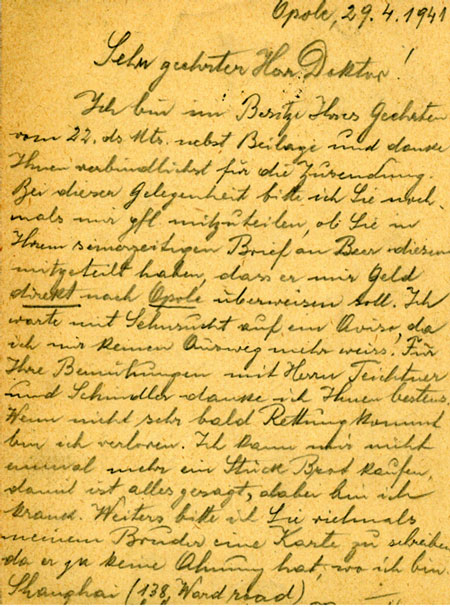
Below are thumbnails of the front and back of three postcards from Opole. The first is a postmarked October 29, 1941, from Opole to Vienna. The second is a postcard from the ghetto to Relico in Switzerland. Relico (the acronym for the Relief Committee for the War-Stricken Jewish Population) was established in Geneva in September 1939 under the auspices of the World Jewish Congress. The postcard acknowledges receipt of six packages from Relico. The postcard is postmarked October 11, 1941, and was received in Geneva on October 20, 1941. The card bears a circular Judenrat cancel. The third postcard was written by Hannes "Israel" Kaufmann to a former colleague, ,Rudolph Kronegg, in Vienna, postmarked "Opole Ueber Pulawy" (by way of) on April 30, 1941. The card has a desperate message: "... need money ... am near the end of my wits ... ill and without any means ... not even enough to buy a piece of bread ...". The writer also asks that his brother who had escaped to Shanghai, China, be notified of his whereabouts. He also requests that in replying the word "Judenrat" not be included in his address, on instructions of the local post office. This was probably advise of a sympathetic postal official, who felt that mail not identified as "Jewish Mail" would be more likely received. Please click on the thumbnail to see the full image, and then click your back key or "Postcards" in the left frame to return.
Museum of Tolerance On Line Learning Center
Spector, The Encyclopedia of Jewish Life Before and During the Holocaust (2001), P. 938
Henry Schwab, The Echoes That Remain, P. 64 (1992)
Copyright © 2004-06 Edward Victor