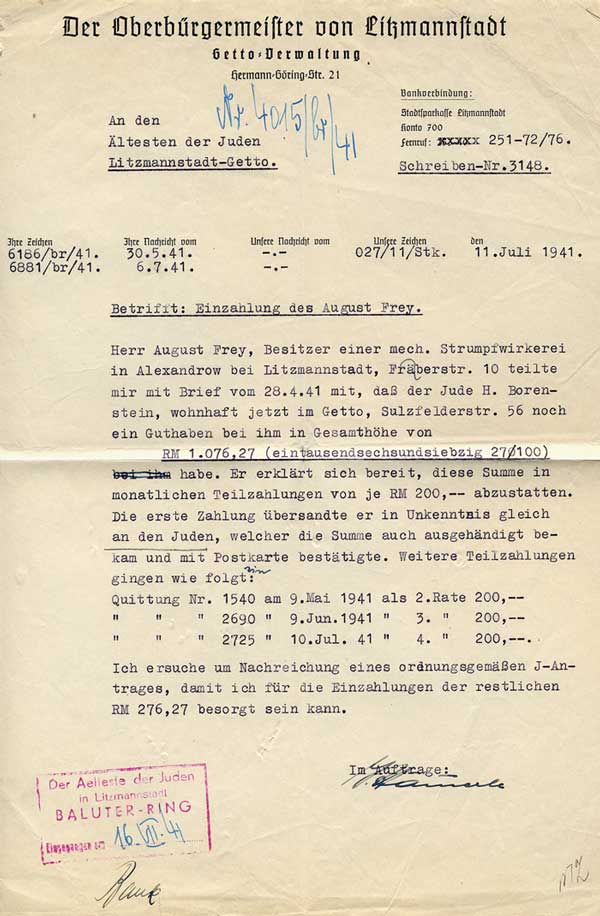

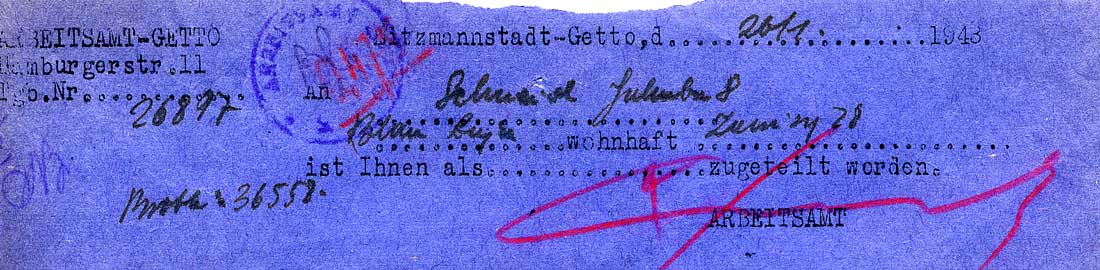
Below are thumbnails of three documents pertaining to the Ghetto administration. The first is a letter on July 11, 1941, from the Mayor of Litzmannstadt to the Judenrat confiscating the property of a Jew named August Frey. The letter contains a receipt stamp of the Ghetto Judenrat. The second is a letter dated July 16, 1941, from the Mayor of Litzmannstadt to the Judenrat of the Ghetto. The letter contains a receipt cachet of the Judenrat. The third is an ID issued by the Arbeitsamt (work division) of the Ghetto which assigned the holder to a workplace. These were highly sought because they prevented deportation. Please click on the thumbnail to see the full image, and then click your back key or "Documents 1-3" in the left frame to return.
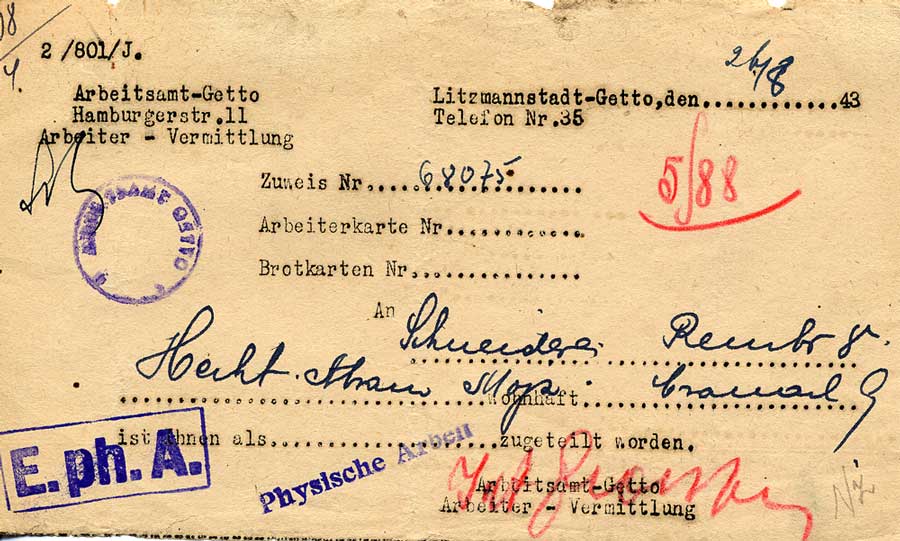
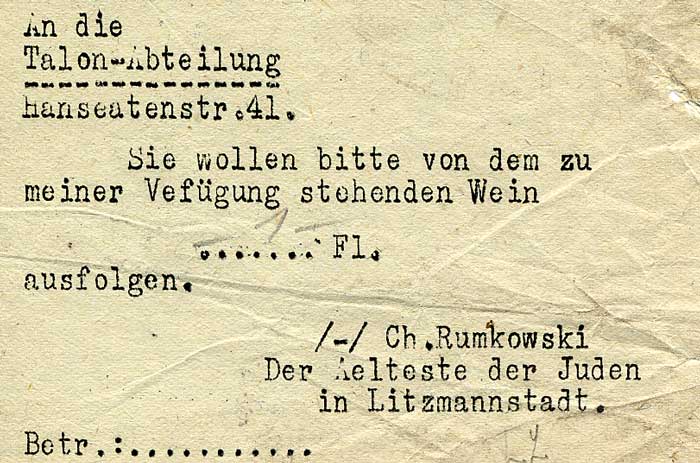
Below are thumbnails of three documents pertaining to the Ghetto administration. The first is a transfer form of the labor department of the Ghetto Administration transferring a worker to a textile factory. The second is a receipt acknowledging a donation of a bottle of wine from the Judenrat for a holiday event. The third is a notice in three languages (German, Polish and Yiddish) pertaining to a wedding in the Ghetto. It indicates that if anyone knows why the two people should not be married, they should contact the Ghetto Rabbis Office. Please click on the thumbnail to see the full image, and then click your back key or "Documents 4-6" in the left frame to return.

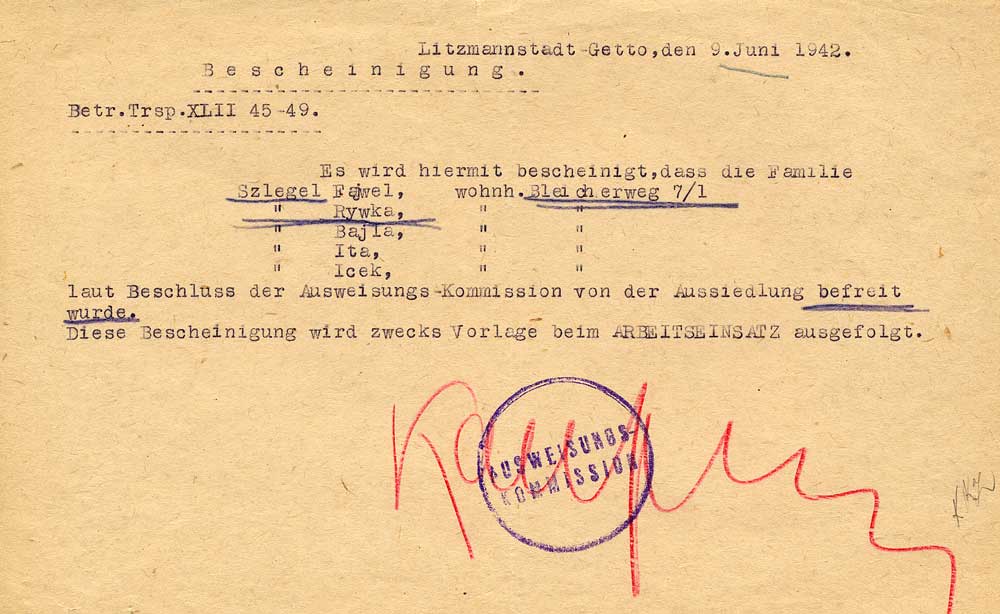
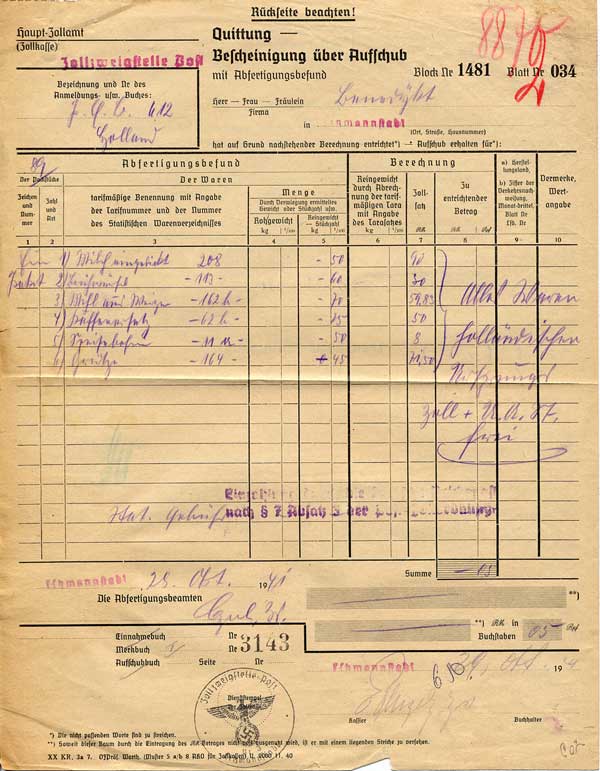
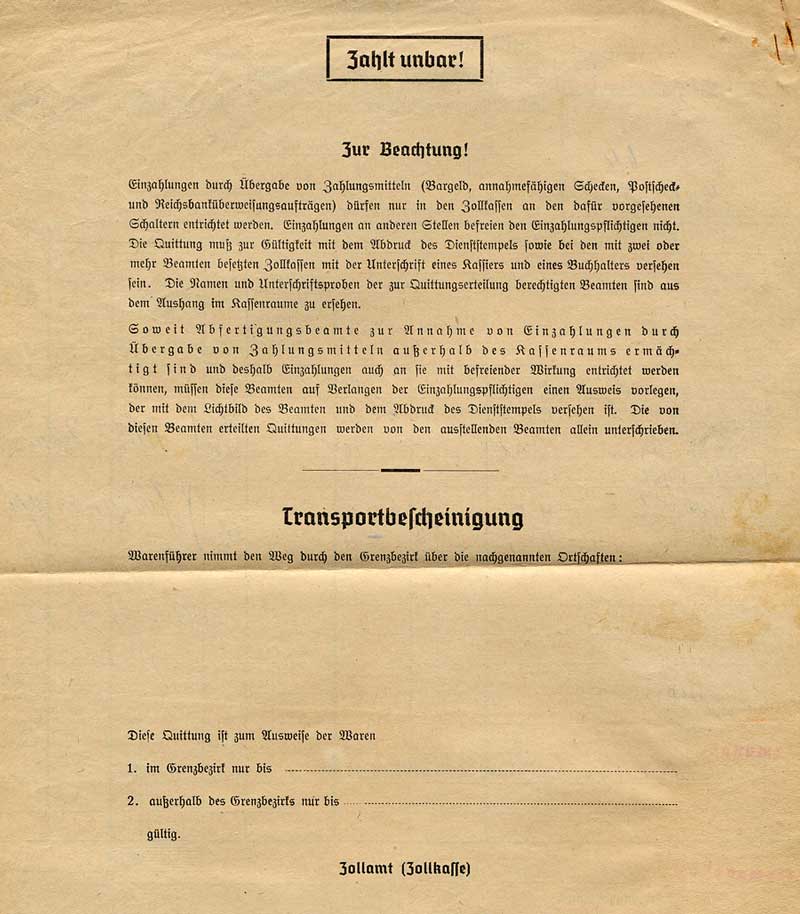
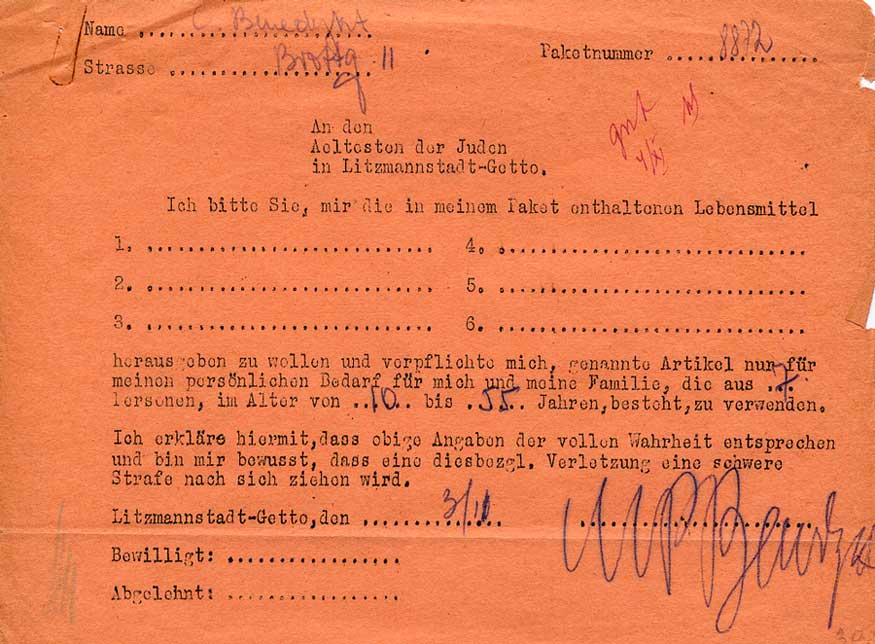
Below are thumbnails of three documents pertaining to the Ghetto administration. The first is a document from the Ausweisungs Commission of the Judenrat dated June 9, 1942. This group determined which individuals would be deported to fill Nazi demands. This document excludes the Szlegel family from a transport. The second and third documents pertain to a shipment of food to the ghetto as follows: the first is the front and back of a German document pertaining to the shipment of food from Holland to a family in the ghetto; and the second is a form from the Judenrat in Litzmannstadt wherein the recipient of the food has to confirm that he has a five member family from 10-55 years old and that the food is for family use only. Please click on the thumbnail to see the full image, and then click your back key or "Documents 7-9" in the left frame to return.
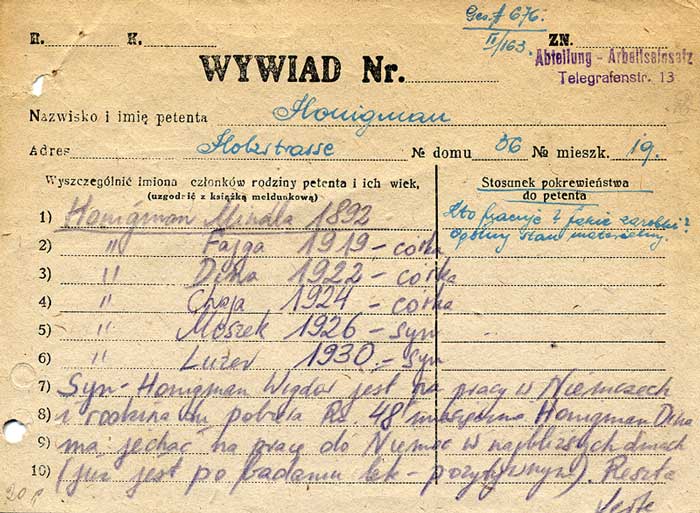
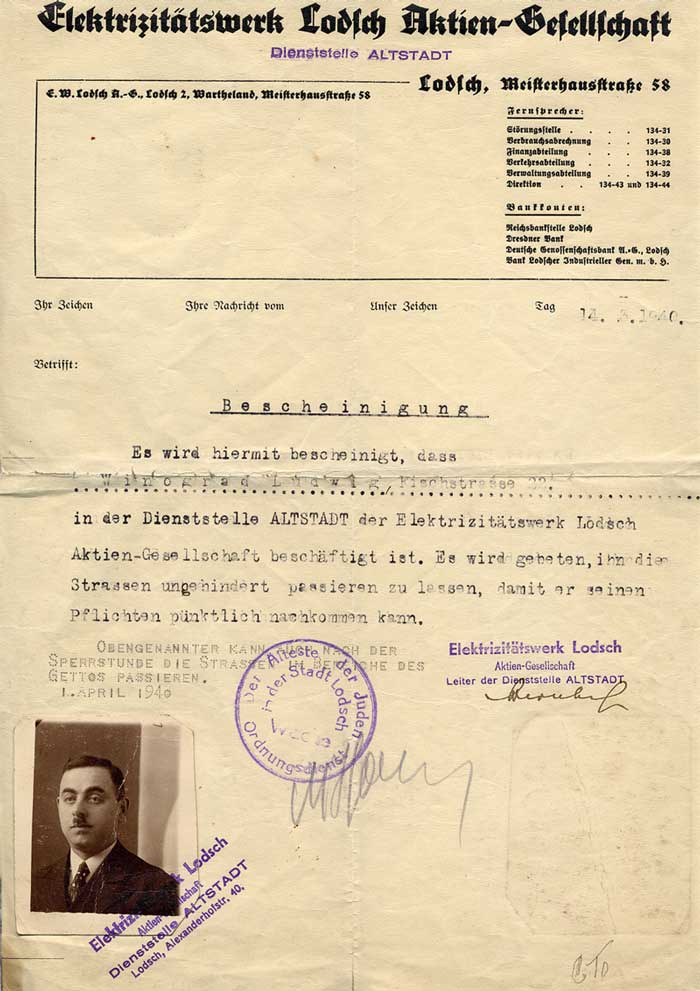
Below are thumbnails of two documents pertaining to the Ghetto administration. The first is the front and back of an inquiry sent to Litzmannstadt regarding the status of a family consisting of a father, three daughters and two sons. The answer indicates that one son was sent to Germany to work and the other son would probably be sent soon. The two daughters have no work and their financial situation is very bad. The second is a document from the Lodsch Electric Company requesting that a Jewish worker, Ludwig Winograd, be allowed to passage in the ghetto after curfew. The document bears the cachet of the Ghetto police. Please click on the thumbnail to see the full image, and then click your back key or "Documents 10-11" in the left frame to return.

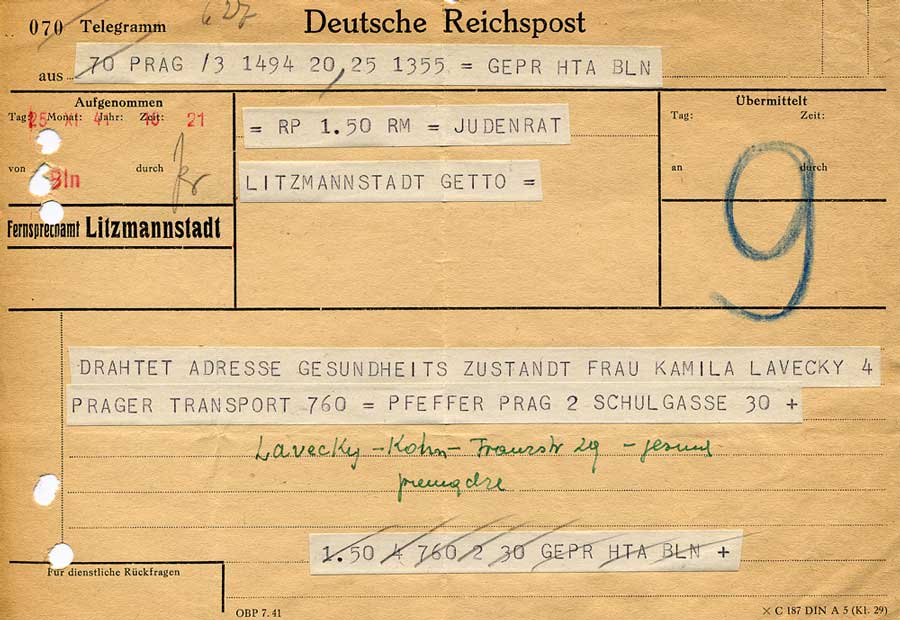
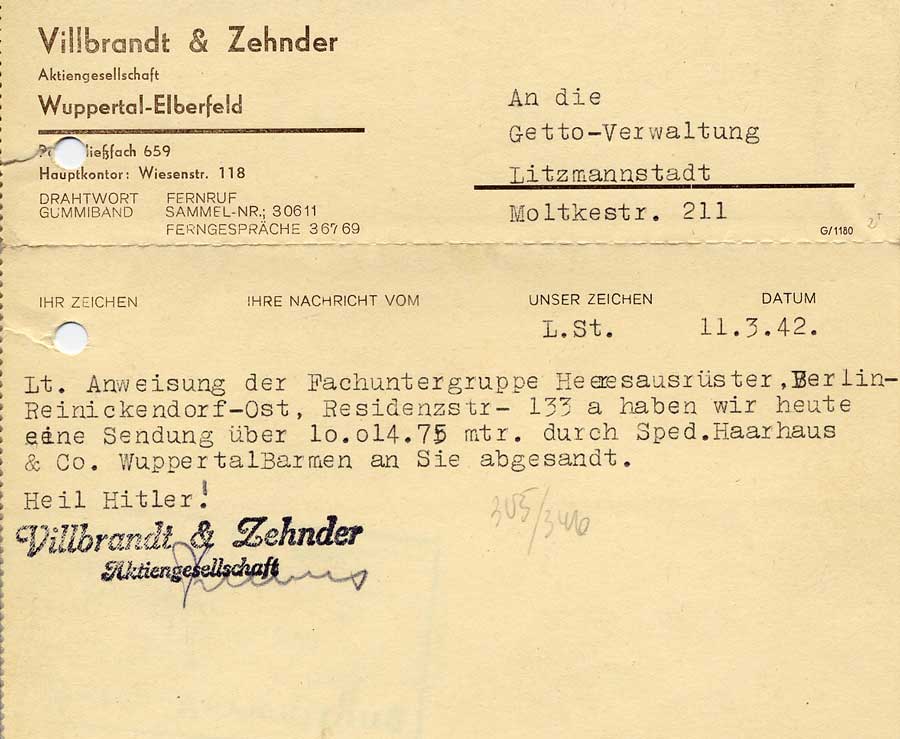
Below are thumbnails of three documents pertaining to the Ghetto administration. The first is a telegram dated November 25, 1941, from Prague to the Judenrat in Liztmanstadt inquiring in to the status of a Jewish woman, Kamila Lavecky, on Transport 760. The answer is written in ink in Polish-- "Healthy". The second item is the front and back of a document dated March 11, 1942, from the Villbrandt & Zehnder Co. to the Ghetto Administration indicating that a shipment of material had been sent to the Ghetto from Germany to be made into uniforms for the army. The last item is the front and back of an ID card issued to Golda Hajnsdorf by the Labor Office of the Judenrat on November 1, 1943. The ID card bears a stamp indicating that she was sent to Auschwitz on Transport #69 on March 3, 1944. Please click on the thumbnail to see the full image, and then click your back key or "Documents 12-14" in the left frame to return.
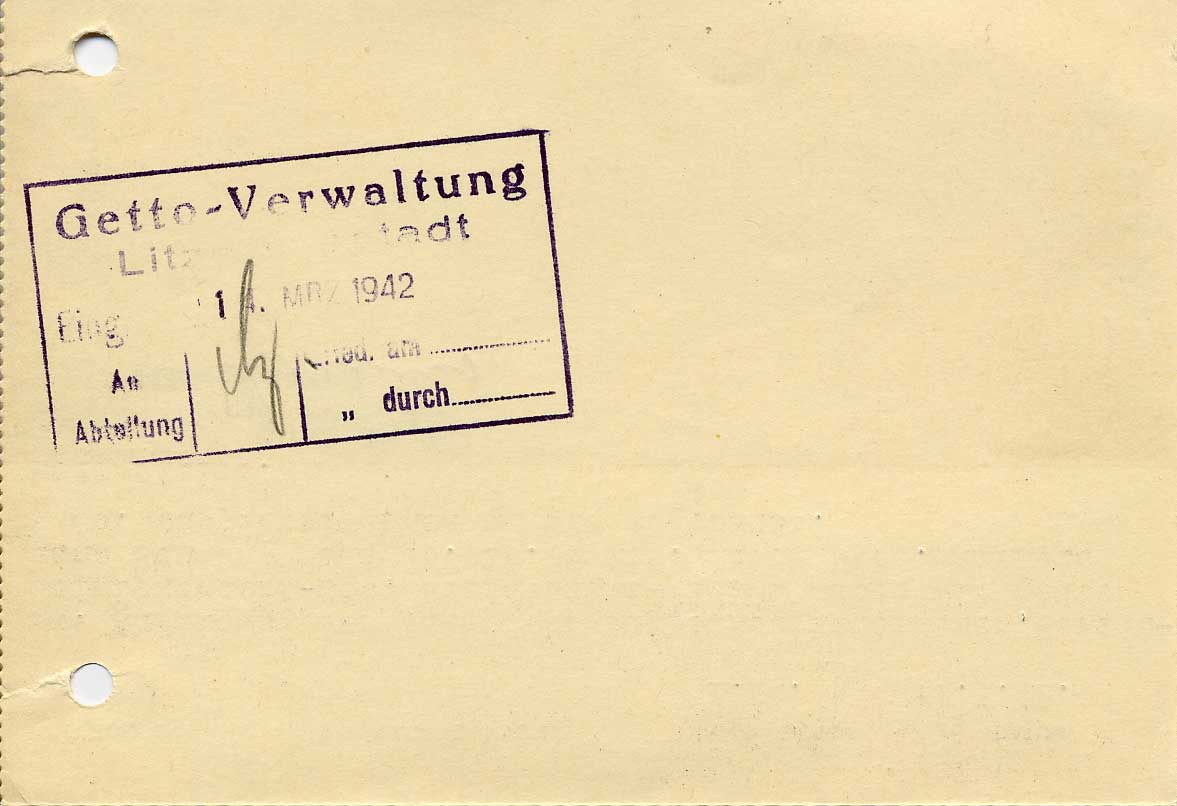
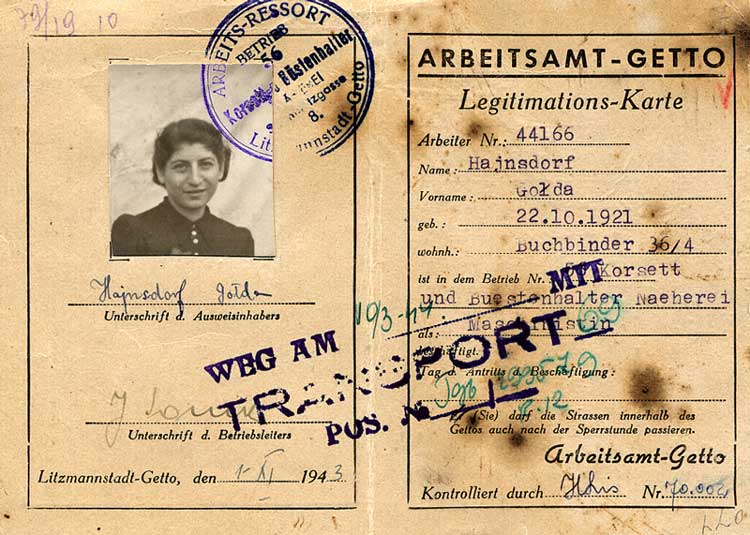
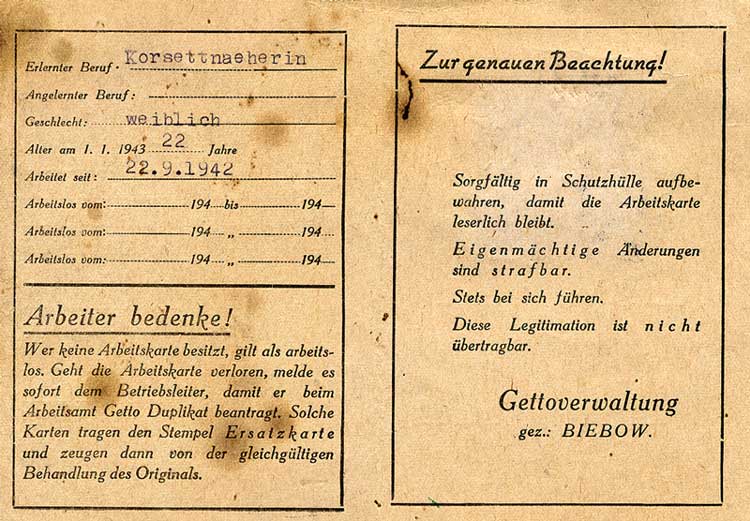
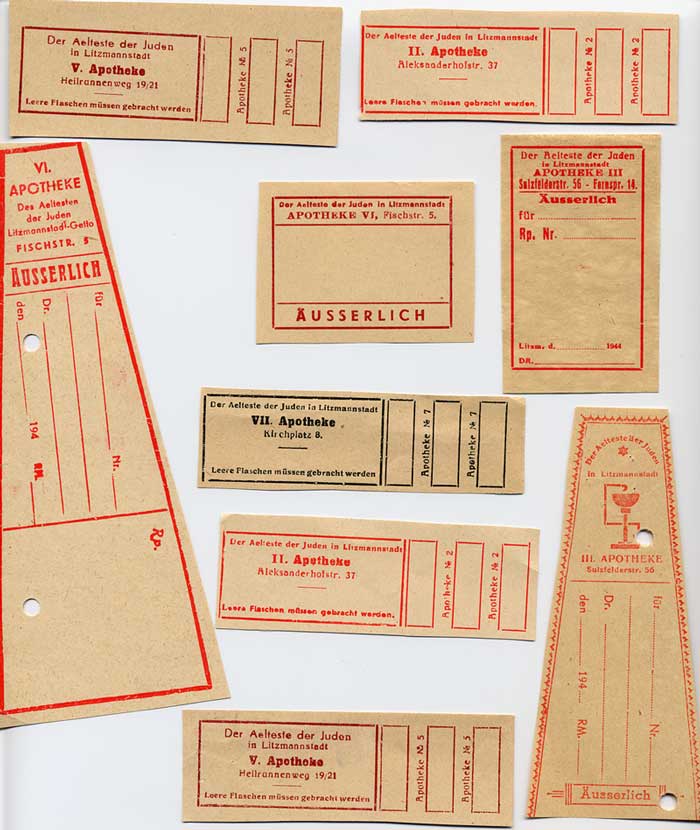
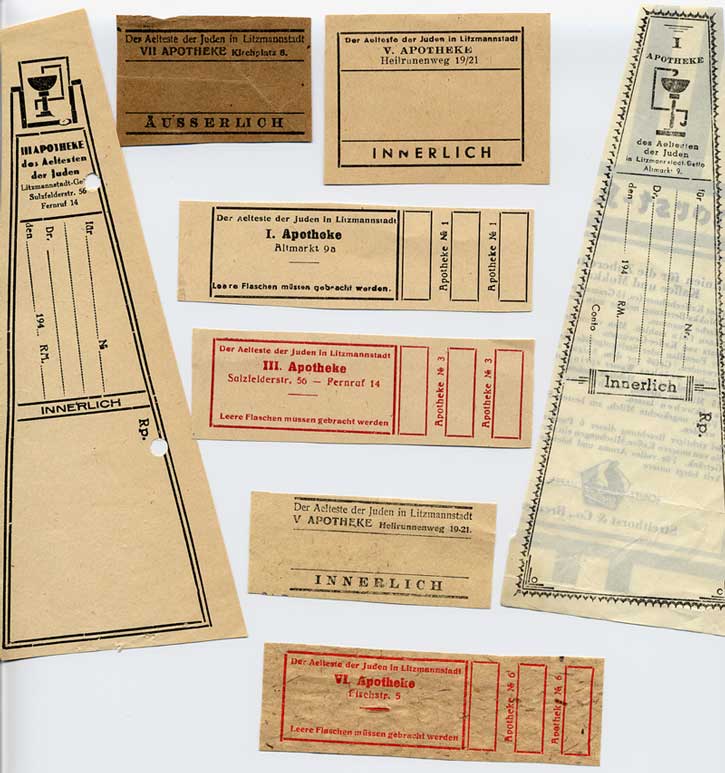
Below are thumbnails of a collection of pharmacy labels issued by the Judenrat. These come from a pharmacist in Litzmannstadt who survived the war. The Jewish pharmacies were confiscated along with all other Jewish property, and the existing stock of medicines were taken over by the German Apothekergesellschaft (Pharmacists' Company). When Rumkowski tried to get back these medicines, he was forced to reimburse this German company 77,000 Reichsmarks. The Judenrat could only buy a limited supply of standard medicines and supplies (no expensive medications were permitted to Jews). Only a limited number of pharmacies were permitted to operate in the ghetto, and these were under the supervision of the Judenrat.
Isaiah Trunk, Judenrat, Stein and Day Publishers (1977), P. 158
Copyright © 2004 Edward Victor